SSVEP Chess
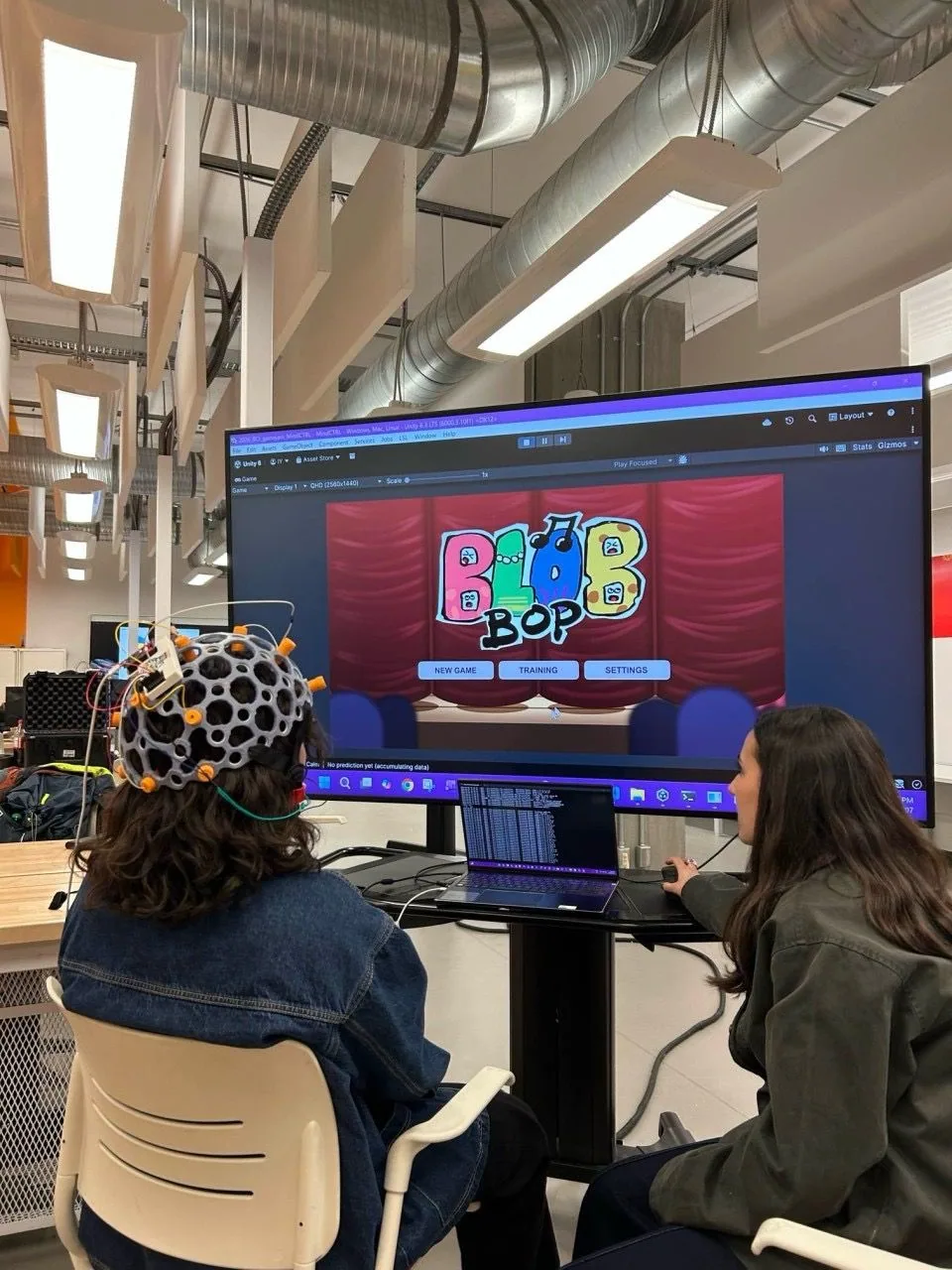
University of Alberta students use NeuroPawn hardware to play chess by looking—via SSVEP.
How SSVEP Works


SSVEP works by locking a user’s visual cortex to the frequency of a flashing stimulus. For example, if you were looking at a 10 hz stimulus, the neurons at the back of your head would turn on and off at 10 hz.

Building the Demo
This group exploited this phenomenon by extracting EEG signals from the back of the head. They were able to process that signal using a fast-fourier transform to extract the component frequencies. They then used filter bank canonical correlation analysis to determine the synchrony of different channels.

Using these techniques they were able to control a chess game just by looking at specific stimuli.